


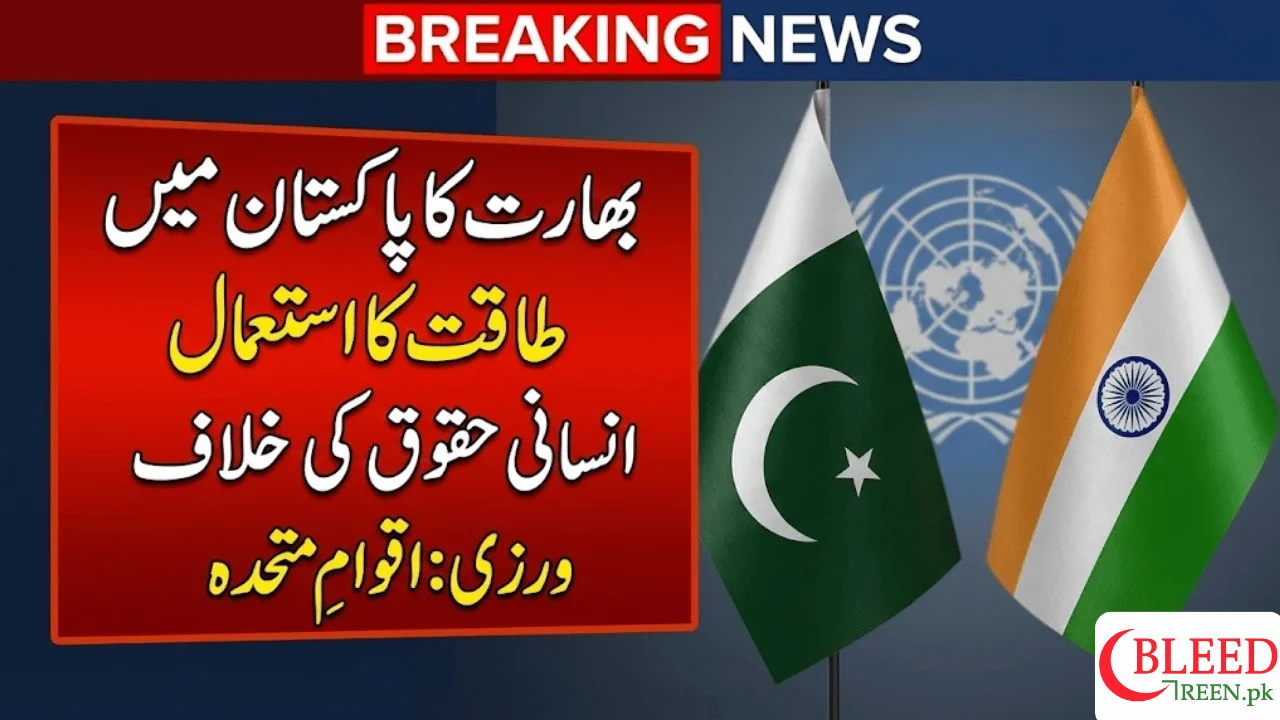
Islamabad: United Nations human rights experts have raised serious concerns over India’s military actions inside Pakistan following the April 22 Pahalgam attack in occupied Kashmir, stating that the response appears to have violated international law and fundamental human rights, including the right to life and personal security.
The observations were made in a report prepared by UN Special Rapporteurs and dated October 16, which was made public earlier this week.
UN Flags ‘Unlawful Use of Force’
According to the UN experts, India’s cross-border military strikes in Pakistan were carried out without notifying the UN Security Council, a requirement under Article 51 of the UN Charter when a state claims self-defence.
The report stresses that international law prohibits the use of armed force against another country’s territorial integrity unless strict legal conditions are met.
“There is no separate right to unilaterally use military force in foreign territory to counter terrorism,” the experts stated.
They added that India has not publicly presented credible evidence linking Pakistan’s government to the Pahalgam incident, raising further concerns about the legality and proportionality of the strikes.

Risk of Escalation Between Nuclear-Armed Neighbours
The UN experts warned that India’s actions may themselves amount to an armed attack, potentially giving Pakistan the right to respond under international law — a situation that could have dangerous consequences for civilians in both countries.
They noted that such actions risk escalating tensions between two nuclear-armed states and undermine global peace and security.
Indus Waters Treaty ‘Abeyance’ Raises Alarm
The report also criticised India’s unilateral decision to place the Indus Waters Treaty (IWT) in “abeyance” after the attack, calling it a move with grave humanitarian implications for Pakistan.
Under the 1960 treaty, Pakistan relies on the Indus, Jhelum, and Chenab rivers, which irrigate nearly 80% of the country’s farmland and support millions of livelihoods.
UN experts warned that any disruption in water flow could threaten:

-
Food security
-
Agricultural employment
-
Access to drinking water
-
Environmental sustainability
They emphasised that water should never be used as a political or economic tool.

Pakistan’s Climate and Water Vulnerability
The report highlighted that Pakistan is already among the world’s most climate-vulnerable countries and faces severe water stress. Any interference with river flows could worsen existing challenges linked to climate change, agriculture, and public health.
International Law Obligations
Citing rulings by the International Court of Justice, the experts reaffirmed that states have a legal obligation to prevent transboundary environmental harm and to respect human rights beyond their borders.
They stressed that the right to a clean, healthy, and sustainable environment is fundamental to the enjoyment of all other human rights.
Pakistan Welcomes UN Findings
President Asif Ali Zardari welcomed the UN report, describing it as an important recognition of civilian harm, treaty violations, and unlawful conduct. Deputy Prime Minister and Foreign Minister Ishaq Dar also referenced the findings while addressing diplomats in Islamabad.
Pakistan has consistently denied involvement in the Pahalgam attack and has reiterated its commitment to peace, international law, and diplomatic resolution of disputes.

