


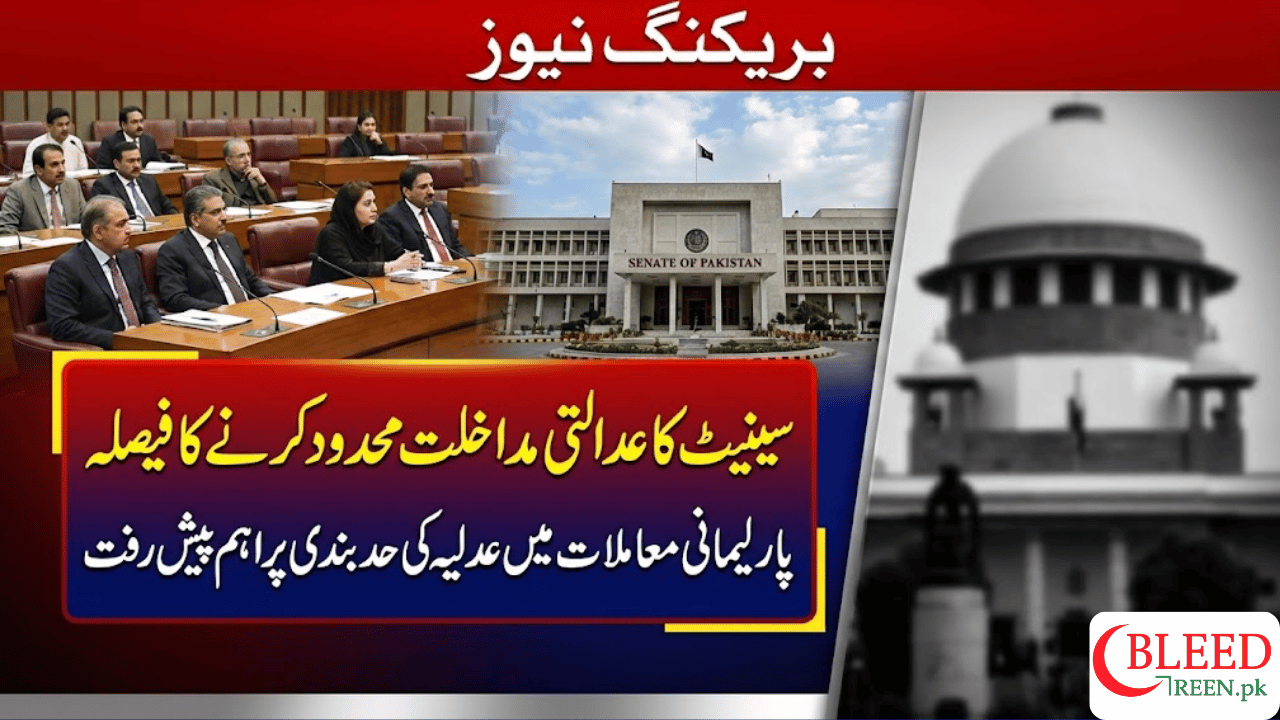
Islamabad: In a significant institutional development, a Senate panel has initiated changes aimed at reinforcing parliamentary autonomy by revising internal rules that govern how public petitions are handled — a move supporters say will reduce judicial intervention in legislative affairs.
The Senate Standing Committee on Rules of Procedure and Privileges has approved a proposed amendment to Rule 166(5) of the Senate’s Rules of Procedure, a provision that has previously been cited by courts while issuing stay orders against parliamentary committee proceedings.
What the Proposed Amendment Seeks to Change
At the core of the proposal is an expanded definition of public petitions, allowing Senate committees to take up a broader range of matters deemed to be of public importance. Under the revised framework, petitions may now include issues involving:
-
Public interest and systemic concerns
-
Regulatory oversight
-
Protection of fundamental rights

-
Disputes with wider societal impact
Supporters argue that this clarification removes ambiguity that has enabled judicial interference in committee work.
Enhanced Role for Senate Chairman
A key feature of the amendment is a new proviso granting the Chairman of the Senate discretionary authority to:
-
Admit or decline petitions
-
Keep petitions pending

-
Prevent frivolous or inappropriate proceedings
According to the committee, this measure is intended to preserve parliamentary discipline while ensuring that oversight mechanisms remain effective and orderly.
Backing and Opposition Within Parliament
The amendment was spearheaded by former Deputy Chairman Saleem Mandviwalla and has reportedly been signed by around three dozen lawmakers. Proponents maintain that parliament, as the supreme representative institution, must retain the authority to conduct oversight without external obstruction.
However, the proposal has not gone unchallenged. The Ministry of Parliamentary Affairs opposed removing language that explicitly bars petitions related to matters under judicial consideration. Senator Saadia Abbasi also cautioned against overreach, stressing that all state institutions must function within their constitutional boundaries.
Context: Rising Tensions Between Judiciary and Legislature
The move follows a series of disputes earlier this year when Islamabad and Lahore High Courts issued stay orders halting proceedings of Senate standing committees. Lawmakers across party lines raised concerns, arguing that such orders undermined parliamentary oversight.

While some legislators welcomed the Attorney General’s view that judicial oversight cannot be entirely excluded under the Constitution, others insisted that repeated court interventions were disrupting legislative functions.
What Happens Next?
The proposed amendment is expected to be tabled before the full Senate for approval. If passed, it could significantly reshape how parliamentary committees function and redefine the balance between judicial review and legislative independence.
Supporters believe the reform will strengthen democratic accountability by empowering elected representatives, while critics warn that institutional harmony must be preserved through clear constitutional limits.

