


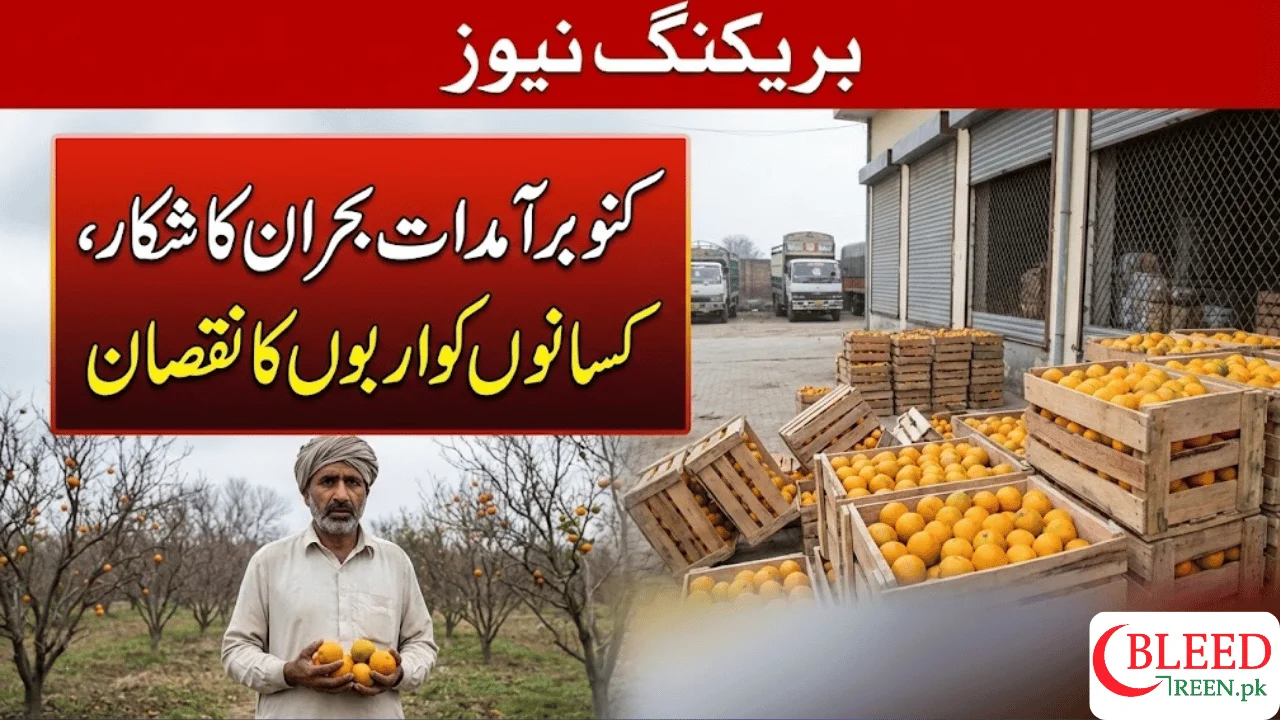
Pakistan’s kinno export industry is facing one of its most challenging seasons in recent years, as regional tensions, rising freight costs, and weak policy support continue to limit the country’s export potential despite an exceptional citrus crop.
Industry estimates suggest that Pakistan may export only 400,000 to 450,000 tonnes of kinno during the 2025–26 season, far below its estimated capacity of 700,000 to 800,000 tonnes. This shortfall highlights deep-rooted structural problems that continue to undermine one of the country’s most valuable horticultural exports.
Strong Crop, Weak Exports
Growers in Sargodha and surrounding citrus-producing regions report excellent fruit size, colour, and quality this season. However, exporters say favourable agricultural conditions have once again failed to translate into higher export volumes.
During the previous season (2024–25), Pakistan exported around 350,000 to 400,000 tonnes of kinno, with Russia, Indonesia, the UAE, Saudi Arabia, Afghanistan, and Central Asian states among the key destinations. While a modest improvement was expected this year, persistent disruptions have capped growth.
Border Closures and Transport Issues Hit Supply Chain
Exporters point to Afghan border restrictions, regional instability, and a recent goods transporters’ strike as major obstacles. These issues have delayed shipments, caused missed export orders, and severely reduced the availability of refrigerated containers required to maintain fruit quality.

As a result, many processing units have either reduced operations or shut down completely. Industry representatives warn that prolonged disruptions could trigger large-scale unemployment, affecting hundreds of thousands of workers linked to harvesting, grading, packing, and transport.
Market Prices Collapse, Farmers Under Pressure
The domestic kinno market has witnessed a sharp price decline over a short period, intensifying financial stress for orchard owners. Prices that remained stable early in the season fell rapidly by mid-December, forcing farmers to sell at distress rates.
Factory operations have slowed significantly, with daily picking cycles reduced by nearly half. Experts warn that repeated topping of trees due to slowed harvesting could cause long-term damage to orchards, impacting future yields.
Cold Storage Crisis and Billions at Risk
Cold storage facilities across Sargodha are reportedly 80–90% full, raising fears of spoilage worth billions of rupees. Growers estimate potential losses between Rs8 billion and Rs10 billion, with knock-on effects likely to reduce farmers’ ability to invest in upcoming crops such as wheat and sugarcane.

Calls for Immediate Government Intervention
Stakeholders are urging the government to take urgent corrective measures to prevent further losses. Key demands include:
-
Opening alternative export routes and markets
-
Providing logistics and freight subsidies
-
Resolving cross-border trade issues

-
Offering targeted financial support to exporters and growers
Experts stress that protecting kinno exports is not just about saving one crop, but about safeguarding rural livelihoods and strengthening Pakistan’s agricultural economy.
Outlook Remains Uncertain
Unless swift action is taken, industry leaders warn that Pakistan risks losing its competitive position in global citrus markets. With international buyers increasingly sensitive to supply reliability, prolonged disruptions could have lasting consequences beyond the current season.

