


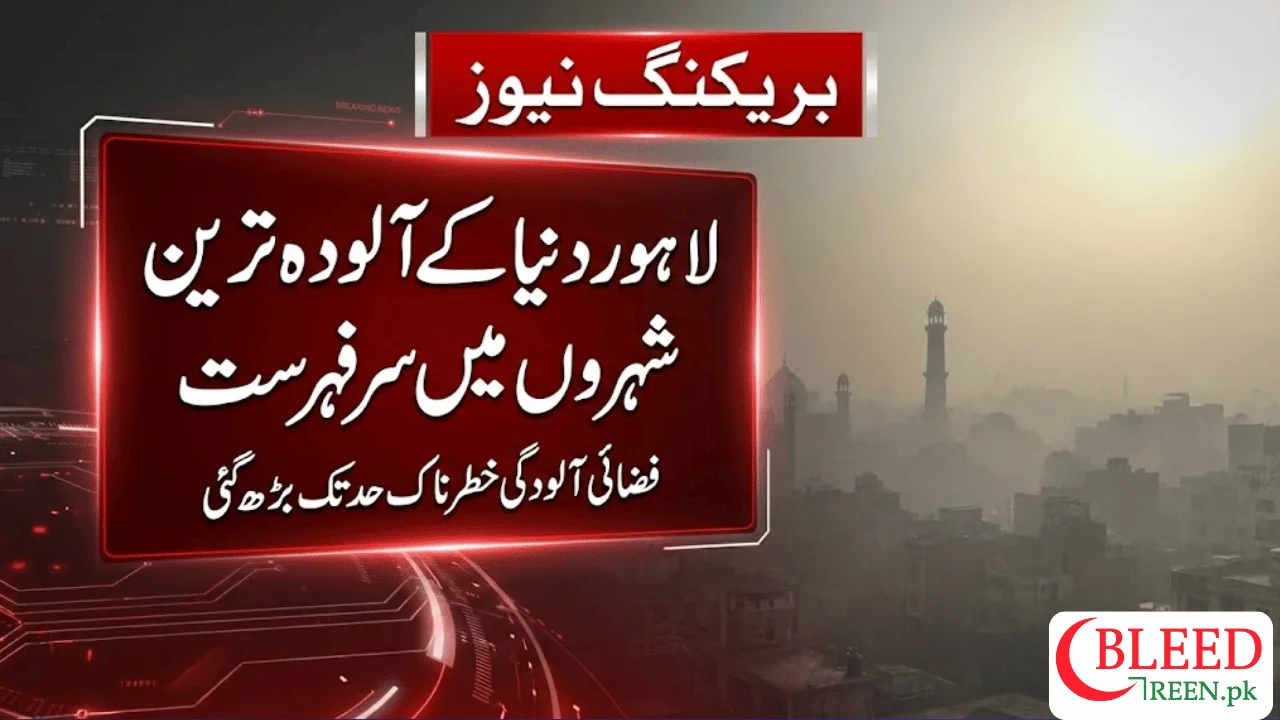
Lahore continued to rank among the most polluted cities in the world for the second straight day, as hazardous air quality blanketed large parts of Punjab, triggering health concerns, travel disruptions, and renewed calls for urgent action.
Punjab Cities Record Extremely High AQI Levels
Real-time air quality data released on Monday by IQAir showed alarming Air Quality Index (AQI) readings across multiple cities. By evening, Sialkot topped the pollution chart with an AQI exceeding 600, followed by Gujrat, Lahore, Kahna Nau, and several other urban centers reporting “hazardous” conditions.
Lahore’s air quality worsened sharply around midday, with AQI levels peaking well above safe limits. Residents have now been exposed to dangerously polluted air for two consecutive days, increasing the risk of respiratory and cardiovascular complications.
Pollution Hotspots Within Lahore
Monitoring stations across Lahore painted an equally troubling picture. Areas including Iqbal Town, Model Town, DHA, Johar Town, and the Civil Secretariat reported AQI readings ranging from “very unhealthy” to “hazardous,” indicating citywide exposure rather than isolated pockets.
Health experts warn that such levels can trigger asthma attacks, eye irritation, reduced lung function, and long-term health damage, especially among children, the elderly, and those with pre-existing conditions.
Weather and Fog Worsen Smog Conditions
The Pakistan Meteorological Department (PMD) said cold and dry weather is expected to persist across Punjab, creating conditions that trap pollutants near the ground. The department also forecast moderate to dense fog during morning and night hours in Lahore, Gujranwala, Sialkot, Multan, Bahawalpur, and several other districts.

Such weather patterns are known to intensify smog episodes, reducing visibility and further deteriorating air quality.
No Clean Air Days Recorded in 2024
A recent report by the Pakistan Air Quality Initiative (PAQI) revealed a stark reality: Lahore did not record a single clean air day in 2024 under World Health Organization (WHO) guidelines.
According to the report, the city’s average PM2.5 concentration remained more than 20 times higher than WHO’s recommended limits, contributing to an estimated reduction of nearly seven years in average life expectancy.
PAQI attributes more than 75% of Lahore’s fine particulate pollution to:
-
Vehicular emissions

-
Industrial activity
-
Brick kilns
The city’s airshed reportedly receives tens of thousands of tons of harmful pollutants annually, including sulphur dioxide, nitrogen oxides, and carbon monoxide.
Government Response and Public Advisory
Senior Provincial Minister Marriyum Aurangzeb said the Punjab government has intensified efforts to control smog. She stated that enforcement teams are taking action against violators, issuing fines, and monitoring industrial and vehicular emissions.
Citizens have been advised to:

-
Wear protective masks outdoors
-
Avoid unnecessary travel
-
Limit physical activity in open air
Travel Disruptions Due to Fog
The worsening conditions also disrupted road travel. Authorities temporarily closed the Lahore–Sialkot Motorway (M-11) due to dense fog and low visibility. Motorway Police urged drivers to exercise caution, use fog lights, maintain safe distances, and travel during daylight hours when possible.
The Bigger Picture
Environmental experts warn that without long-term structural reforms, including cleaner transport, industrial regulation, and alternative energy solutions, Lahore’s air quality crisis will continue to deepen—posing a serious threat to public health and economic productivity.
BleedGreen.pk will continue to track air quality trends, government measures, and health advisories to keep readers informed as the smog situation evolves.

