


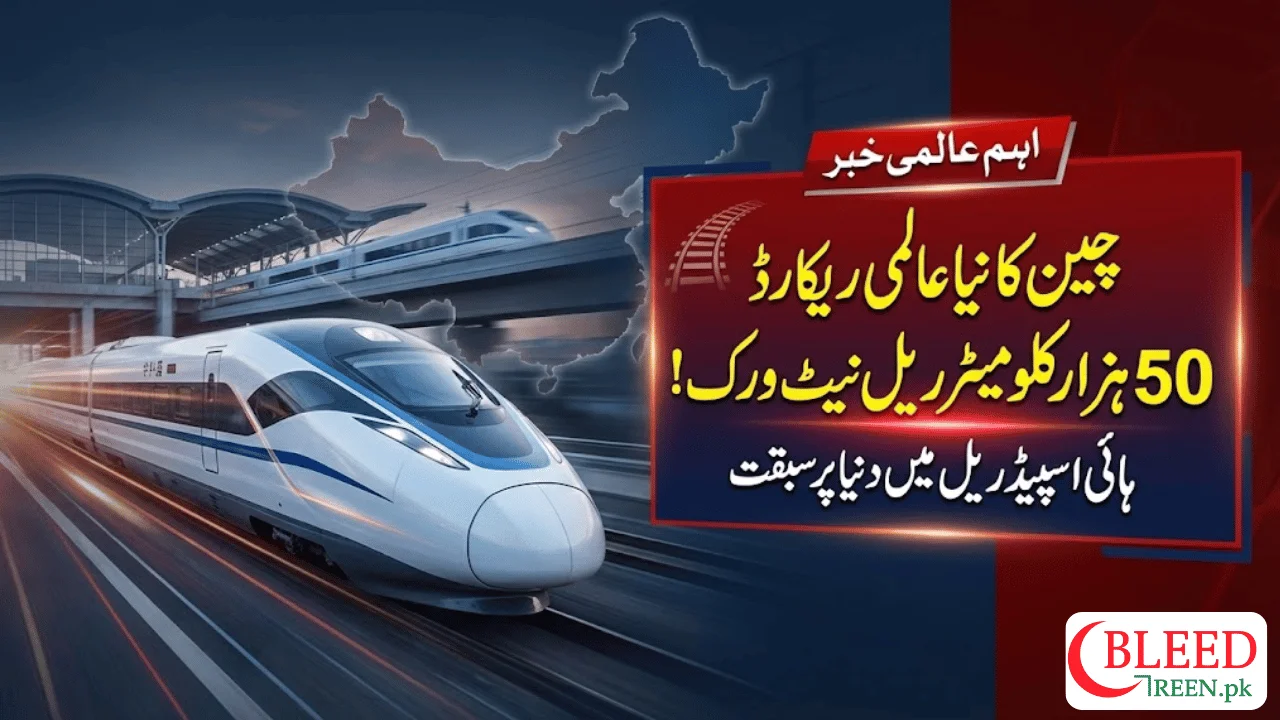
China has reached a historic milestone in global infrastructure development after its high-speed rail (HSR) network officially surpassed 50,000 kilometres in total operational length, further cementing its position as the world’s undisputed leader in modern rail transport.
The achievement was confirmed on December 26, 2025, following the inauguration of a newly completed high-speed rail line, pushing China’s network to a scale unmatched by any other country.
World’s Largest Rail Network Expands Further
With this expansion, China’s high-speed rail system is now longer than one-fifth of the Earth’s circumference, highlighting the unprecedented scale and pace of the country’s infrastructure growth. Since 2020, the network has expanded by nearly 32 per cent, reflecting sustained state investment in transport connectivity.

The latest line supports trains operating at speeds of up to 350 kilometres per hour, surpassing Japan’s famed Shinkansen, which typically runs at a maximum speed of 320 km/h.
Outpacing Global Rivals
China’s rapid progress has placed it far ahead of other high-speed rail nations, including Japan, France, Germany and Spain. Analysts note that no other country has managed to combine speed, scale and nationwide coverage at a comparable level.

The development underscores Beijing’s long-term strategy of using advanced transport systems to boost domestic economic integration, reduce regional disparities and improve mobility across vast distances.
Urban Impact and Compensation Measures
As with many large-scale infrastructure projects, the rail expansion has also brought urban adjustments. In some areas, residential properties were cleared to facilitate construction. Local authorities confirmed that affected households received relocation compensation of 5,000 yuan (approximately $700) per household, as outlined in previously announced development plans.

Belt and Road Influence
Beyond its borders, China has also supported railway development in several Asian and developing countries through the Belt and Road Initiative (BRI). While some overseas rail projects have faced delays or political debate, China’s domestic rail success continues to serve as a showcase of its engineering and logistical capabilities.
From Rapid Growth to Global Dominance
Experts believe China’s rail sector is now transitioning from a phase of rapid construction to one of long-term operational dominance, technological refinement and export of expertise. The focus is expected to shift towards smarter rail systems, energy efficiency and integration with urban transport networks.
As global demand for sustainable and efficient transport rises, China’s high-speed rail model is increasingly viewed as a benchmark for future infrastructure planning worldwide.

