


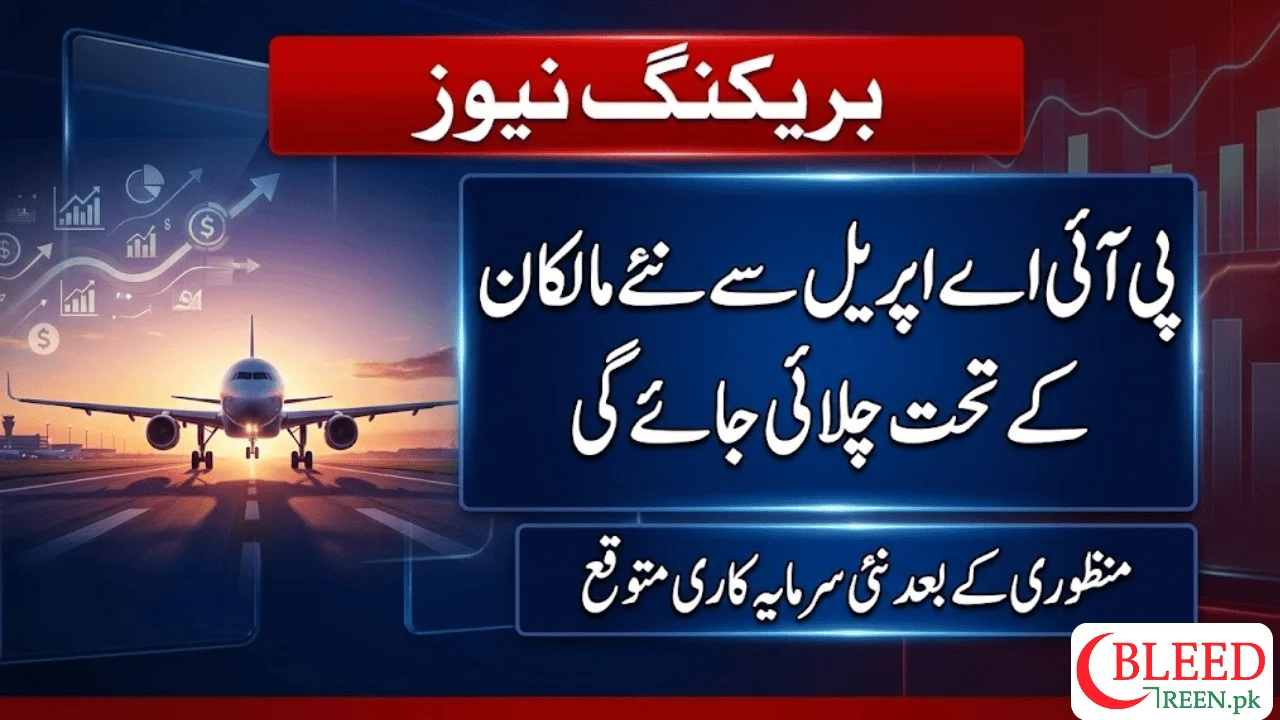
Pakistan’s national flag carrier Pakistan International Airlines (PIA) is expected to begin operations under its new private owners from April, subject to regulatory and cabinet approvals, according to Muhammad Ali, Adviser to the Prime Minister on Privatisation.
The development follows a landmark breakthrough in Pakistan’s long-stalled privatisation efforts, after a consortium led by Arif Habib Corporation Limited emerged as the highest bidder for a 75% stake in PIA.
What the Timeline Looks Like
Speaking in an interview, the prime minister’s adviser said the privatisation process has now entered its final approval phase. Key milestones include:
-
Approval by the Privatisation Commission Board and federal cabinet (expected within days)
-
Signing of the sale agreement within approximately two weeks
-
Financial close after a 90-day period, required to fulfil legal and regulatory conditions
If these steps proceed as planned, the new owners are expected to take operational control of PIA by April.
Details of the Winning Bid
The Arif Habib-led consortium submitted a Rs135 billion offer, comfortably exceeding the government’s reserve price of Rs100 billion—a sharp contrast to last year’s failed privatisation attempt.
The government will receive:
-
Around Rs10 billion in upfront cash
-
Retain a 25% minority stake, estimated to be worth about Rs45 billion
Importantly, the deal has been structured to inject fresh capital into the airline, rather than simply transferring ownership.
“We did not want a scenario where the government sells the airline, takes the money, and the company still collapses,” Muhammad Ali said.
Who Is in the Consortium?
Alongside Arif Habib Corporation, the winning group includes:
-
Fatima Fertiliser Company Limited
-
City Schools (Private) Limited
-
Lake City Holdings (Private) Limited
The adviser also revealed that the consortium may add up to two additional partners, including a foreign airline, if eligibility criteria are met. Such additions could strengthen finances and bring international aviation expertise.
Although Fauji Fertiliser Company opted out of bidding, it may still join the consortium later as a partner.
Employee Protection and Safeguards
Addressing labour concerns, the government has placed mandatory safeguards in the agreement:
-
All PIA employees must be retained for at least 12 months
-
Employment terms and contracts cannot be altered during this period
PIA’s workforce has already been reduced in recent years, easing some restructuring pressures.
Additionally, retained earnest money and extra payments at signing will allow the government to move to the second-highest bidder if the transaction fails to close.
IMF Pressure and Economic Reforms
The privatisation of PIA is being closely monitored by the International Monetary Fund (IMF), which has urged Pakistan to curb losses at state-owned enterprises.
Muhammad Ali described the transaction as a critical test of Pakistan’s reform credibility, warning that continued losses at public-sector firms could reignite fiscal pressure.
Successfully closing the PIA deal, he said, would signal momentum on broader reforms and open the door for further privatisations in the pipeline.
What This Means Going Forward
If approvals are secured on schedule, PIA’s transition to private management by April could mark a turning point for an airline that has struggled with losses for decades. Analysts believe the real challenge now lies in operational turnaround, governance reforms, and restoring passenger confidence.
For the government, the deal represents more than a single transaction—it is a litmus test for Pakistan’s economic reform agenda.
Stay with BleedGreen.pk for timely updates, expert analysis, and verified coverage of Pakistan’s business and economic developments.

