


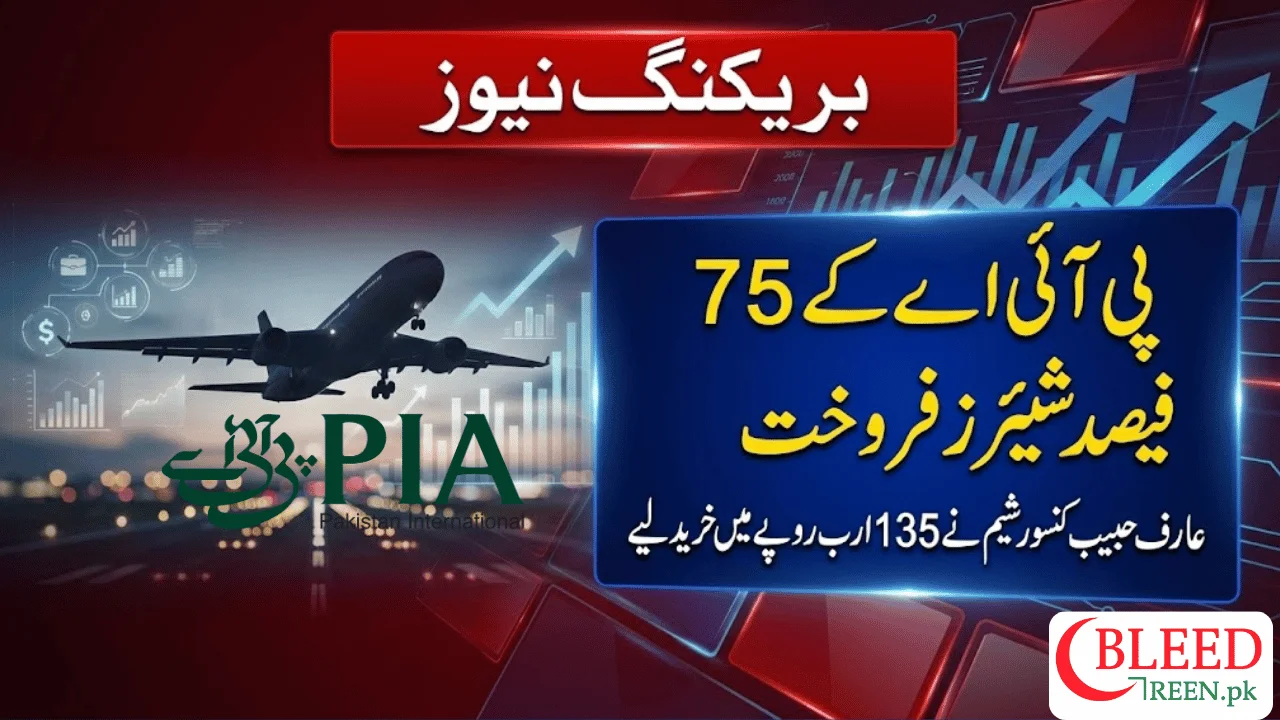
Pakistan has reached a major milestone in its long-delayed privatisation drive as an Arif Habib-led consortium successfully acquired a 75% controlling stake in Pakistan International Airlines (PIA) for Rs135 billion, bringing an end to years of uncertainty surrounding the future of the national flag carrier.
The deal, finalised on Tuesday, marks one of the largest privatisation transactions in Pakistan’s recent history and is being viewed as a critical step toward reviving the loss-making airline.
Who Bought PIA? Inside the Winning Consortium
The winning consortium is led by Arif Habib Corporation Limited and includes:
-
Fatima Fertiliser Company Limited
-
City Schools (Private) Limited
-
Lake City Holdings (Private) Limited
By securing the majority stake, the consortium will take over management control and operational decision-making of PIA.
How the Rs135 Billion Will Be Used
Out of the total transaction value:
-
Rs10.12 billion will be received by the Government of Pakistan as cash
-
The remaining amount will be reinvested directly into PIA, strengthening its balance sheet and supporting restructuring efforts
Under the approved structure, 92.5% of the proceeds are earmarked for the airline, while 7.5% goes to the government.
The state will retain a 25% minority stake, with the option for the new owners to acquire it at a later stage.
How the Auction Played Out
The privatisation process moved into a second round of competitive bidding after multiple offers crossed the government’s minimum expected price of Rs100 billion.
First-round bids:
-
Lucky Consortium: Rs101.5 billion
-
Air Blue Consortium: Rs26.5 billion
-
Arif Habib Consortium: Rs115 billion
This triggered a second phase, where bidding intensified. The Arif Habib-led group ultimately emerged victorious with a final bid of Rs135 billion, narrowly beating the Lucky Consortium’s last offer of Rs134 billion.
Transparency and Oversight
The process was overseen by the Privatisation Commission of Pakistan, which emphasised transparency and public accountability throughout the auction.
Bids were opened in the presence of media representatives, and officials stated that the sale followed all regulatory and legal requirements. The reference price was approved by the Cabinet Committee on Privatisation (CCOP) and formally endorsed by the federal cabinet.
Why PIA’s Privatisation Matters
PIA has struggled financially for decades. According to analysts, the airline has incurred losses exceeding Rs800 billion over the past 20 years, becoming a major burden on the national exchequer.
The government’s renewed push to offload its stake aligns with broader economic reforms under the International Monetary Fund (IMF) programme, which calls for restructuring or privatisation of cash-draining state-owned enterprises.
A previous attempt to sell PIA collapsed last year due to weak investor interest and unresolved liabilities, prompting authorities to relaunch the process with revised terms and greater clarity.
What’s Next for PIA?
According to the Privatisation Commission, PIA’s current fleet of 18 aircraft is projected to double within the next three to four years under the new ownership, subject to business plan execution and regulatory approvals.
Business leaders and analysts have stressed that the real challenge now lies in operational turnaround, improved governance, route rationalisation, and restoring public confidence in the airline.
Big Picture: A Test Case for Economic Reforms
The successful sale of PIA is being seen as a litmus test for Pakistan’s privatisation agenda under Prime Minister Shehbaz Sharif’s economic reform plan. If executed effectively, it could pave the way for further privatisation of major state-owned enterprises and ease fiscal pressure on the government.
For now, all eyes are on how the new management transforms PIA—from a symbol of persistent losses into a commercially viable airline.
Stay with BleedGreen.pk for verified updates, in-depth business coverage, and analysis of Pakistan’s evolving economic landscape.

