


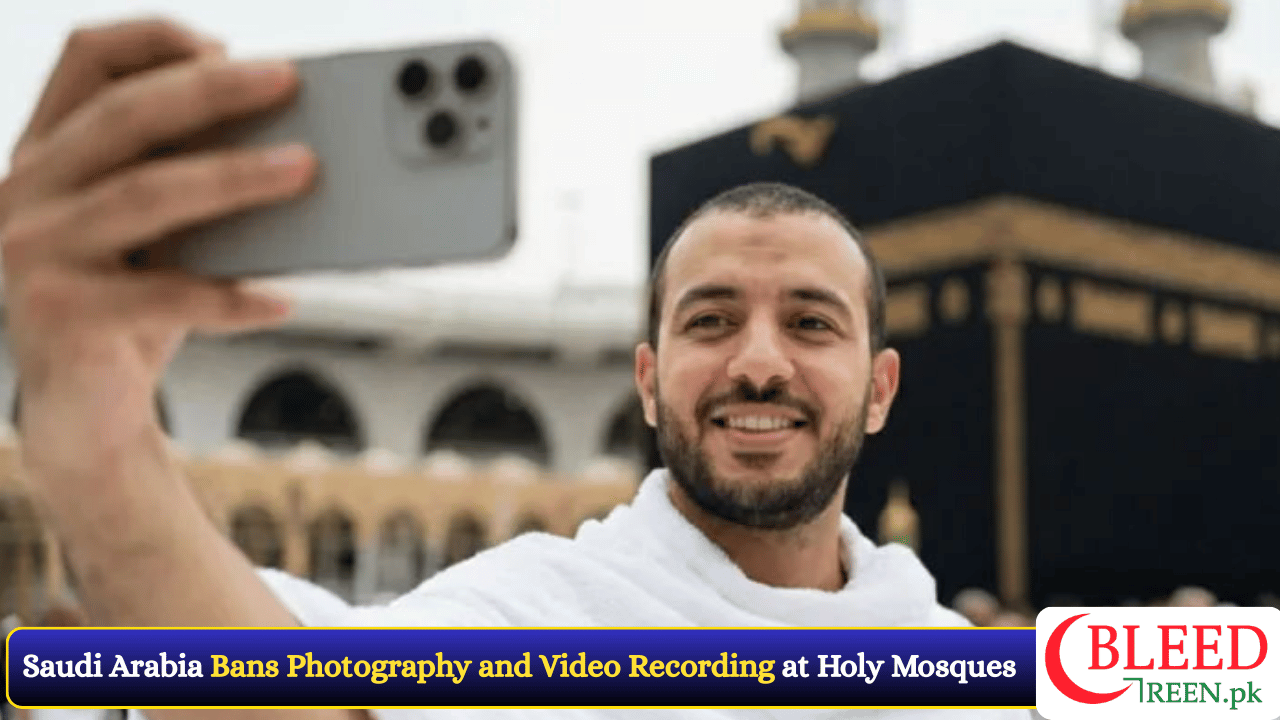
Saudi Arabia has announced a strict ban on photography and video recording inside the Masjid al-Haram in Makkah and Masjid an-Nabawi in Madinah, marking one of the most significant policy updates for pilgrims ahead of the upcoming Hajj season.
The decision, issued by the Saudi Ministry of Hajj and Umrah, applies to all recording devices — including smartphones, professional cameras, and digital equipment.
Why Saudi Arabia Banned Photography at Holy Mosques (Featured Snippet Optimized)
-
To reduce overcrowding inside sacred areas
-
To prevent disruptions during prayers and rituals
-
To maintain spiritual focus and respect for worshippers
-
To protect the privacy of visitors and pilgrims
-
To ensure smooth crowd movement during peak Hajj activities
A Move to Protect Pilgrims’ Peace and Safety
According to the ministry, the growing trend of taking photos and videos inside the holy sites had begun causing crowd blockages, distractions during worship, and privacy violations.
Officials explained that while many pilgrims capture moments for personal memory, the practice has unintentionally contributed to unsafe congestion — especially near high-traffic areas such as the Black Stone, Rawdah, and prayer corridors.

The new policy aims to restore a peaceful, spiritually focused environment for millions of worshippers who visit the holy mosques throughout the year.
Strict Enforcement Across All Holy Sites
Security personnel stationed in both mosques will actively enforce the ban.
Pilgrims who attempt to take photos or record videos may be asked to delete the media or face penalties under mosque regulations.
The ministry also confirmed that the rule will apply at other holy locations along the Hajj route, ensuring consistent implementation during the busy pilgrimage season.
International Support and Regional Praise
Earlier this month, the Gulf Cooperation Council (GCC) leadership congratulated Saudi Arabia for its exceptional organization of recent Hajj operations.
The council highlighted the Kingdom’s efforts under the leadership of the Custodian of the Two Holy Mosques, King Salman bin Abdulaziz, praising:
-
Improved facilities for pilgrims
-
Enhanced safety protocols
-
Efficient crowd management
-
Outstanding care for Umrah performers and visitors
This new photography policy is viewed as part of Saudi Arabia’s ongoing commitment to improving security, dignity, and worship experience for all pilgrims.
What Pilgrims Need to Know Before Visiting
Anyone planning Umrah or Hajj should be aware of the following guidelines:
-
Refrain from photography and videography inside prayer halls, mataaf, Rawdah, and crowded areas
-
Do not use selfie sticks, tripods, or stabilizers

-
Follow instructions issued by mosque security officials
-
Share updates with family outside the sacred areas, not during rituals
The ministry encourages pilgrims to focus on worship, reflection, and spiritual presence rather than capturing photos during sacred moments.
Final Thoughts
Saudi Arabia’s decision to ban photography inside the holy mosques marks an important step toward preserving the sanctity, safety, and spiritual environment of Islam’s holiest sites.
As millions prepare for the upcoming Hajj season, the Kingdom aims to ensure that every pilgrim experiences worship with dignity, comfort, and tranquility — free from disruptions and crowding caused by recording devices.

